
How fast can you deploy after a disaster hits Arden-Arcade?
Speed depends on three things: how many units you need, where the site sits, and whether the street is passable. Once a delivery route is confirmed we can usually stage standard porta potty rental units the same day or the next morning. A portable toilet rental crew brings units already serviced, so the first stop is functional the moment it lands.
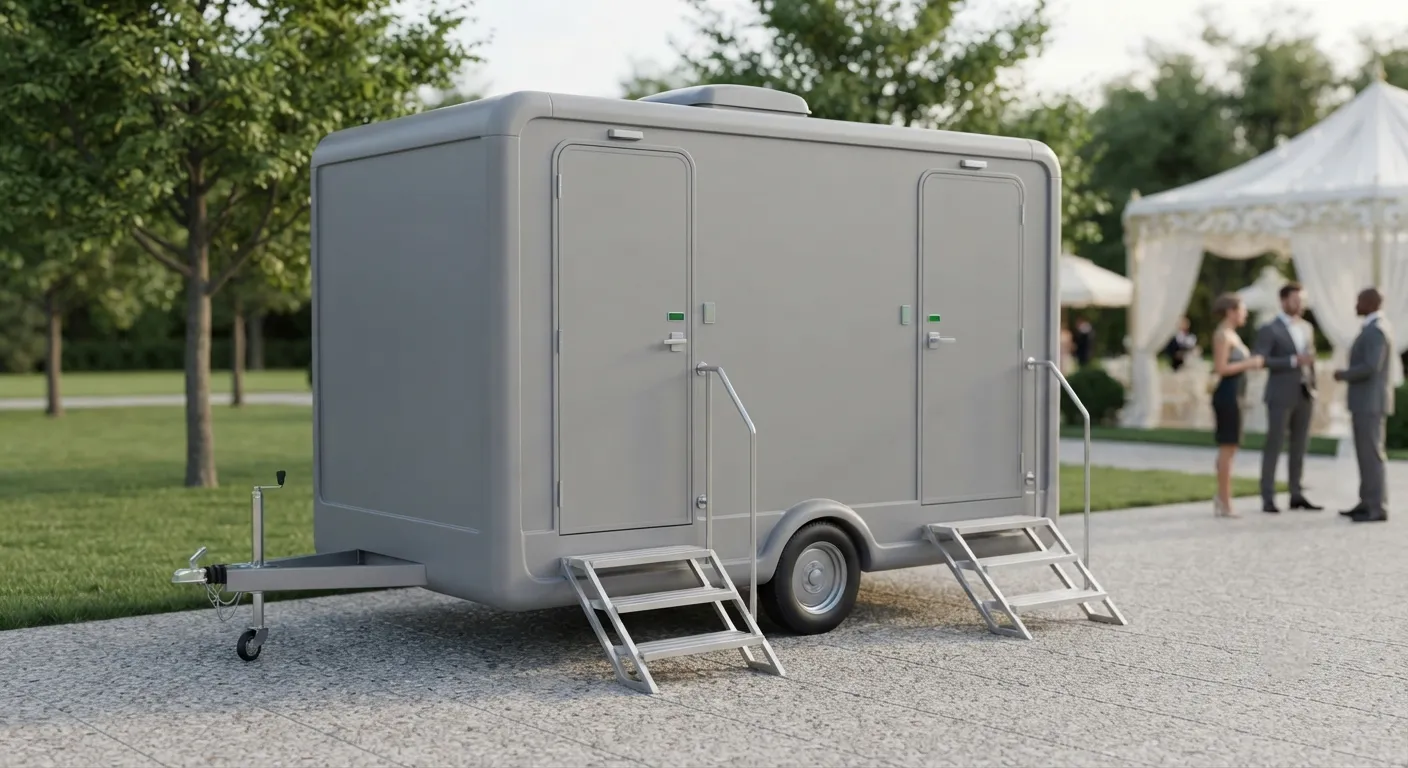
Disaster response is different from a planned event. There's no lead time to plan placement, so we lean on the same guidance we give construction clients: our porta potty placement guide covers ground clearance, tie-down needs in wind events, and keeping units off soft or flooded ground. Each standard unit runs about 44 by 48 inches on the ground and stands roughly 92 inches tall, so even a narrow driveway or a cleared curb strip in Arden-Arcade can usually take one. If the property has downed trees or debris blocking a straight approach, tell the dispatcher early. Roll-off deliveries need about 60 feet of straight clearance behind the truck, and that same clearance rule affects where we can safely stage a restroom trailer rental if a shelter site needs multiple stalls.
For anyone coordinating a shelter or staging area rather than a single household, our emergency porta potty rental page has response specifics, and disaster relief sanitation requests get priority routing over routine swaps.
What sanitation setup does a shelter or relief site actually need?
A shelter housing displaced families needs more than a toilet in the parking lot. OSHA 1926.51(c) sets the baseline ratio used across the industry: one toilet facility for 20 workers or fewer, scaling up from there, and while that standard is written for job sites, relief coordinators in Arden-Arcade often use it as a planning floor for population counts too. Add handwashing station rental units nearby, since 29 CFR 1910.141(d)2 requires soap and towels or a hand-drying device at washing facilities, not sanitizer alone. A rack of hand sanitizer station rental units is a fine supplement but doesn't substitute for real handwashing on its own.
If the site serves anyone with mobility limitations, ADA Standards section 213.2 requires at least 5 percent of clustered single-user units to be accessible, with a minimum of one no matter the cluster size. Our ada accessible porta potty units meet the 36 inch clear route width called out in ADA Standards 403.5.1 and the 32 inch clear door opening required under 404.2.3, so a wheelchair or a walker gets through without a fight. For sites needing showers on top of toilets, a shower trailer rental can run alongside a bank of standard units, and if the relief effort stretches past a few days, ask about a porta potty rental checklist so nothing gets missed during a chaotic setup.
Sites near Rosemont, 4.9 miles southeast of Arden-Arcade, and La Riviera, 5.3 miles southeast, fall inside our normal response radius, so a shelter drawing evacuees from either area doesn't add meaningful drive time to service runs.
What does emergency sanitation cost during a disaster response?
Pricing during a relief response follows the same bands as any rental, just compressed into shorter windows. Weekend surge pricing on a standard unit runs from about 125 to 400 dollars depending on demand and delivery distance, which matters most in the first 48 to 72 hours after an event.
| unit | duration | typical price |
|---|---|---|
| standard | day | 150 |
| standard | week | 200 |
| ada | day | 230 |
| delivery_fee | day | 150 |
| service_fee | day | 175 |
Multi-day relief operations often shift to weekly billing once the initial surge passes, since a monthly porta potty rental or weekly rate beats paying day rates for two or three weeks straight. Check porta potty rental cost for the full breakdown, or porta potty rental per day if your response window is still short and uncertain. Relief coordinators managing agencies, insurers or municipal budgets should request an itemized quote through request a quote rather than working off list pricing, since delivery fees and service intervals shift fast during an active response.
Frequently asked questions
How many units does a relief shelter need per evacuee count?
Start with OSHA 1926.51(c) as your ratio floor: one unit per 20 people, then add units for peak hours like meal service. Our how many porta potties do i need guide walks through the math for shelters, not just job sites.
Can you service units daily during an active disaster response?
Yes. ANSI/PSAI Z4.3 sets a weekly baseline for up to 10 users over 40 hours, but high-traffic shelter sites need daily or twice-daily pumping. Tell dispatch your headcount and we'll set a servicing schedule that matches actual use.
Do you provide handwashing stations separate from toilet units?
Yes, and they're often billed and delivered separately. See portable sink rental for stations with running water rather than sanitizer gel, which satisfies handwashing requirements under 29 CFR 1910.141(d)(2).
Is there a minimum rental period during disaster response?
No fixed minimum applies to relief deployments. Day rates apply for short windows, and we convert to weekly billing automatically once a site passes about a week of continuous service.
What if the road to the site is blocked by debris?
Call dispatch before the scheduled delivery. We'll reroute or hold the unit until a barricaded lane opens, since OSHA 1926.202 barricade standards guide how we and first responders keep access lanes clear.
Next step
Get a delivery date
Tell us the address, the dates and the headcount. We size the order and confirm the route.