How many restrooms does a farm crew need?
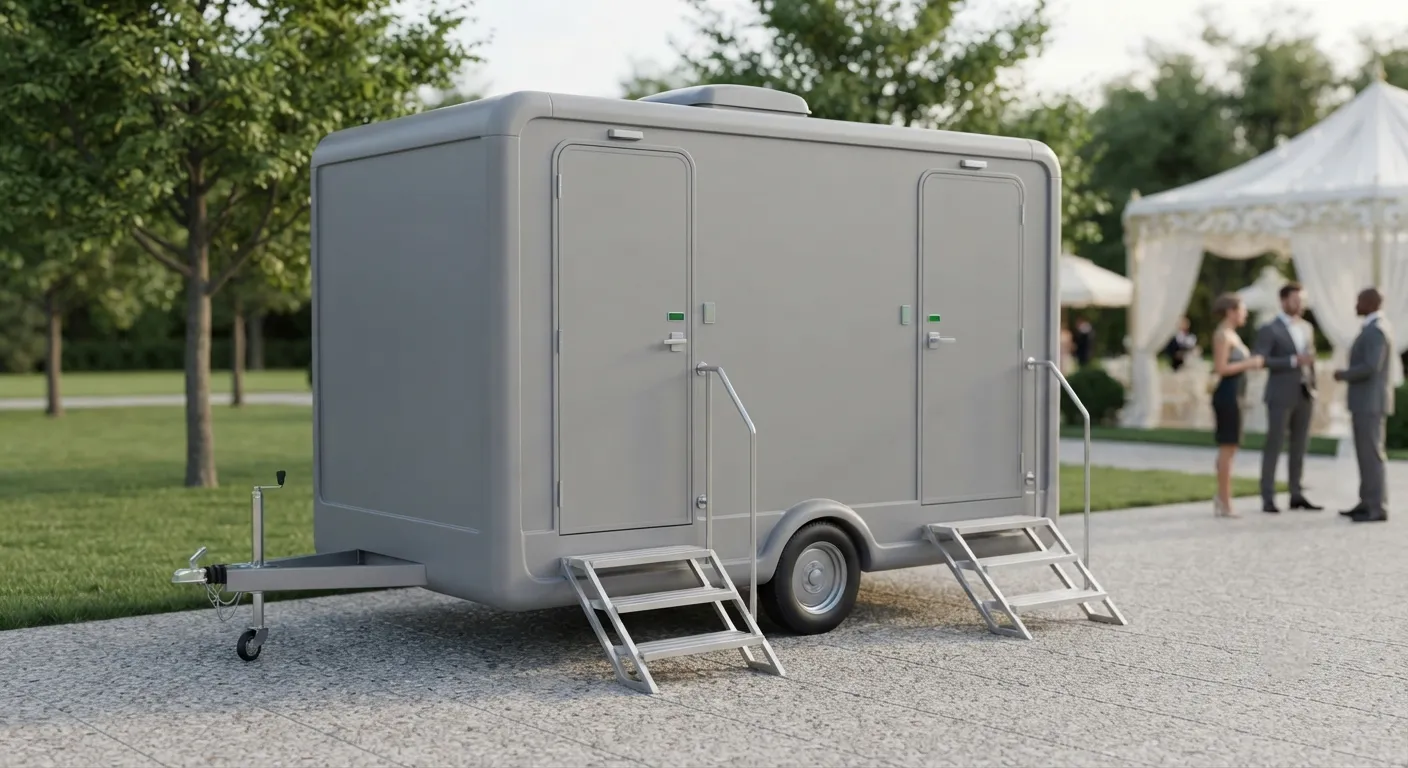
Start with the headcount, then split it by field or block if your crew spreads out. OSHA 1928.110 requires one toilet facility per 20 hand-labor workers, and each unit has to sit within a quarter mile walk of wherever people are working. That rule exists because ag labor moves through acreage all day, unlike a fixed construction pad. If you run three crews across three fields near Arden-Arcade, you likely need three separate placements, not one bank of units at the barn. A standard porta potty rental works for most row-crop and orchard settings, and each unit holds a 60 to 70 gallon tank, which covers a full day for a typical crew before service is due. Larger operations with packing sheds or wash stations often add a portable sink rental or a full handwashing station rental near the restrooms, since OSHA 1928.110 also calls for handwashing water and soap for hand-labor employees, separate from drinking water. Check the how many porta potties do I need guide before you order, especially if crew size shifts by season. We service Arden-Arcade directly and reach Rosemont, 4.9 miles southeast, and La Riviera, 5.3 miles southeast, on the same routes.
What does farm restroom rental cost in Arden-Arcade?
A standard unit runs a defined range by rental length, and longer terms cost more, not less, because service visits add up over time.
| duration | low | typical | high |
|---|---|---|---|
| day | $100 | $150 | $350 |
| week | $130 | $200 | $500 |
| month | $125 | $200 | $325 |
Seasonal ag work often runs monthly, since planting through harvest can stretch several months in the Central Valley climate around Arden-Arcade. A delivery fee applies on top of the unit rate, and that fee also scales with the length of the rental. If your farm needs restrooms for a single harvest push, a shorter term makes sense; for standing crews across a growing season, a monthly plan spreads the delivery cost thinner. See the full porta potty rental cost breakdown or the monthly porta potty rental page for term options. Some operations near Citrus Heights, 9.8 miles northeast, and McClellan Park, 10.1 miles north, run comparable crew sizes and land on similar monthly terms. If you are budgeting a single day of contract labor rather than a season, the porta potty rental per day page has that number instead.
Do farm restrooms need to be ADA accessible?
If any worker or visitor needs an accessible unit, ADA Standards 213.2 requires at least one accessible unit in any cluster of single-user portable toilets, and never fewer than one regardless of cluster size. That rule matters for farms that host pick-your-own visitors, farm stands, or public tours alongside labor crews, since the accessibility requirement applies to units the public uses too. An ADA accessible porta potty meets the wider door and turning space that standard units don't have, and ADA Standards 304.3.1 calls for a 60 inch turning circle inside the accessible stall. Placement matters as much as the unit itself: ADA Standards 405.2 limits any ramp to a 1:12 slope, so a unit set on uneven field ground without a level pad can fail that standard even if the unit itself is compliant. Farms running events, like a fall festival or corn maze alongside working acreage, should also look at event restroom rental or the porta potty placement guide for setting units where both crews and visitors can reach them. For wash-down operations using pesticides or herbicides, OSHA 1926.51(f)(1) requires washing facilities for employees handling those chemicals, which is a narrower rule than general field sanitation and worth checking against your spray schedule.
Beyond restrooms, most farm operations end up needing more than one type of site service across a season. A septic pumping service handles farmhouse or bunkhouse tanks, and a residential septic tank is typically pumped every 3 to 5 years depending on tank size and household count. Packing operations with grease from equipment cleaning may need grease trap pumping, pumped once fats, oils, grease and solids reach 25 percent of the tank's liquid depth. Farms doing seasonal cleanup or old equipment removal often add a roll-off dumpster rental, and if you're storing tools or seasonal gear, a storage container rental beats a half-built shed. For fencing off chemical storage or keeping livestock away from work zones, see temporary fence rental. Full-scale operations juggling several of these at once should start at construction site services or the main Porta Potty Rental in Arden-Arcade, CA hub page for coordinated delivery.
Frequently asked questions
How often do farm porta potties get serviced?
ANSI/PSAI Z4.3 sets a baseline of one service visit per week for up to 10 users across a 40 hour week. Larger crews or longer field hours need more frequent visits. Ask us to match service days to your harvest schedule.
Can portable restrooms handle remote field locations?
Yes, if there's truck access. Delivery needs a clear path to the drop site, and rough or muddy field roads can slow placement. Tell us your field layout when you request a quote so we can route correctly.
What size units work best for orchard or row-crop crews?
A standard unit works for most crews and measures about 44 by 48 inches on the ground, fitting narrow field edges and turnrows. See standard porta potty rental for full specs.
Do we need handwashing stations separate from restrooms?
Yes. 29 CFR 1910.141(d)(2) requires soap and towels or a hand-drying device at washing facilities, and sanitizer alone doesn't satisfy that. Pair restrooms with a handwashing station rental for compliant setups.
How far in advance should we book for harvest season?
Book as early as your harvest date is known. Demand rises fast across Arden-Arcade and nearby growing areas during peak season. Contact us through request a quote to lock in delivery dates.
Next step
Get a delivery date
Tell us the address, the dates and the headcount. We size the order and confirm the route.