
How Many Porta Potties Do I Need for a Job Site? (OSHA)
Start with the headcount, then check how many porta potties you need against 1926.51(c): 20 or fewer workers means 1 toilet, and once you pass 20, you add a toilet seat and a urinal per 40 workers. At 200 or more employees, the ratio shifts to one seat and one urinal per 50. A crew building out a strip center near Rosemont, 4.9 miles southeast of Arden-Arcade, with 35 workers would need to move past a single unit. Most contractors round up rather than land exactly on the ratio, since crews fluctuate week to week. If you are not sure which unit fits, compare a standard porta potty rental against a deluxe flushable porta potty for larger crews working full shifts. Water matters too: OSHA 1926.51(a)(1) requires an adequate supply of potable water at every place of employment, which is why sites often pair toilets with a handwashing station rental. Arden-Arcade Porta Pros sizes crews against these ratios before quoting, not after.
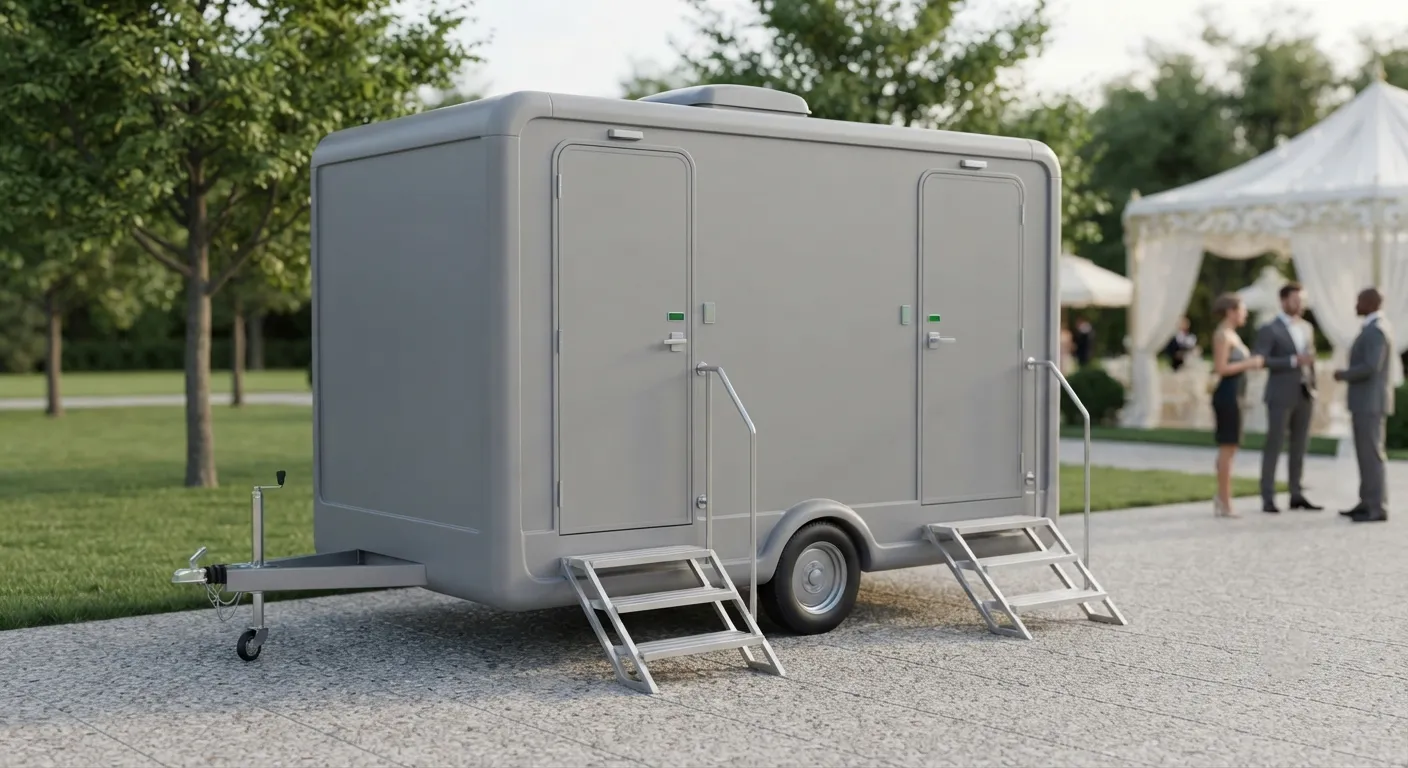
What Does Cal/OSHA Require Beyond Federal Rules?
Cal/OSHA generally applies the federal construction sanitation standard, so the ratio in 1926.51(c) still governs toilet counts on California job sites. What changes locally is enforcement and inspection timing, not the math behind the ratio. Site sanitation also covers housekeeping under 1926.25, which requires scrap and debris cleared from work areas, and that's often the reason contractors pair a roll-off dumpster rental with their toilet order on day one. Agricultural operations near Arden-Arcade fall under a different standard entirely: 1928.110 sets field sanitation rules for hand-labor crews, requiring potable water, toilets and handwashing within a quarter mile walk, at one facility per 20 employees. That distance rule matters for growers working parcels stretched across the valley. For general industry workplaces that are not construction, the applicable ratio comes from 1910.141(c)(1)(i) instead. If your crew works with paints, coatings, herbicides or insecticides, 1926.51(f)(1) kicks in separately, requiring washing facilities beyond the general toilet count.
Where Should Units Be Placed on Site?
Placement drives compliance as much as headcount does. There is no single osha portable toilet distance requirements figure in feet, but practical access and truck clearance both shape where units land, and the same logic holds whether you are asking about portable toilet rental oshawa, Ontario, or a job site here in Arden-Arcade. A roll-off dumpster rental or a portable toilet delivery both need clear approach: roll-off trucks need about 60 feet of straight clearance behind the vehicle to set a container down safely. That same access logic applies to toilet placement near active work zones, especially on sites also running a temporary fence rental or barricades under 1926.202, which must conform to ANSI D6.1. Illumination matters after dark too, since 1926.56(a) sets minimum lighting levels for construction areas, which is why some crews add a light tower rental near restroom stations on night shifts. For our porta potty placement guide, we walk through firm ground, route width and service truck access together, since a unit stuck in mud on a McClellan Park site, 10.1 miles north of Arden-Arcade, does nobody any good.
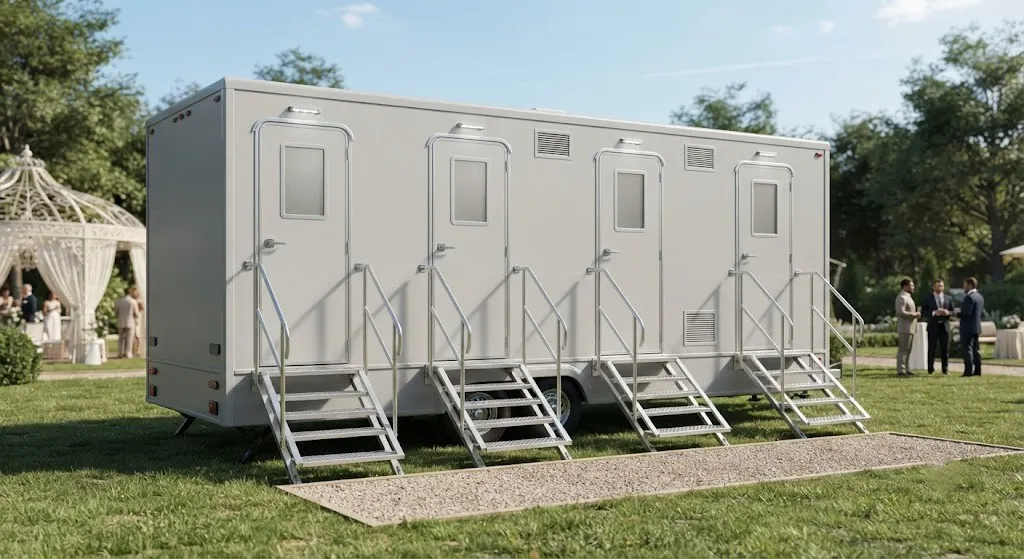
Do OSHA Rules Require Accessible Units?
Not directly, but ADA rules often apply alongside OSHA once the public is involved, and many contractors treat both standards as the baseline anyway. ADA Standards section 213.2 requires that where single-user portable units are clustered, at least 5 percent, and never fewer than one, be wheelchair accessible. An ADA accessible porta potty needs a 60 inch turning circle per section 304.3.1 and a minimum 32 inch clear door opening under section 404.2.3. Our ADA restroom requirements page breaks down clear route width, too: 36 inches minimum, per section 403.5.1. None of this replaces the OSHA toilet ratio; it stacks on top of it whenever the site serves the public, like an event near La Riviera, 5.3 miles southeast of Arden-Arcade. Crews running events also lean on 29 CFR 1910.141(d)(2), which requires soap and towels or a hand-drying device at washing stations, since hand sanitizer alone doesn't satisfy that rule.
Frequently asked questions
How many porta potties does a 50 person crew need under OSHA?
At 50 workers, you've crossed the 20-worker threshold, so the ratio adds a toilet seat and urinal per 40 employees under 1926.51(c). Practically, that means at least two toilets and likely one urinal station, depending on how the crew splits across shifts and site zones.
Does OSHA require heated or winterized units?
OSHA doesn't specify heating, but usable, functional units matter year-round. Our porta potty in winter guide covers freeze prevention steps. Compliance hinges on the unit being usable and serviced on schedule, not on a specific temperature rating.
Can one portable toilet serve two nearby job sites?
Only if headcount and distance both stay within the ratio and practical walking access. OSHA's ratio is about worker count per site, not shared units across separate locations, so most contractors order separately for each active site rather than split one unit.
What happens if a site fails an OSHA sanitation inspection?
Inspectors typically cite the specific ratio violation under 1926.51(c) and require correction on a timeline. Adding units fast is the usual fix; check our emergency porta potty rental option if you need same-day correction after a citation or a walkthrough.
How much does an OSHA-compliant unit cost to rent?
A standard unit typically runs $150 a day or $200 a week within measured pricing bands; see porta potty rental cost for full ranges. Costs shift with duration, so check monthly porta potty rental if the job runs long.
Next step
Get a delivery date
Tell us the address, the dates and the headcount. We size the order and confirm the route.